A unit does not have to be locked to one rental model. Many Norwegian rental companies need flexibility across seasons, campaigns and signed leases. The challenge is doing it without the calendars colliding.
Why build for flexibility?
A good system lets the same unit handle both bookings and leases. That means you can adapt to demand without moving data between tools or keeping parallel overviews.
The biggest trap: double-booking
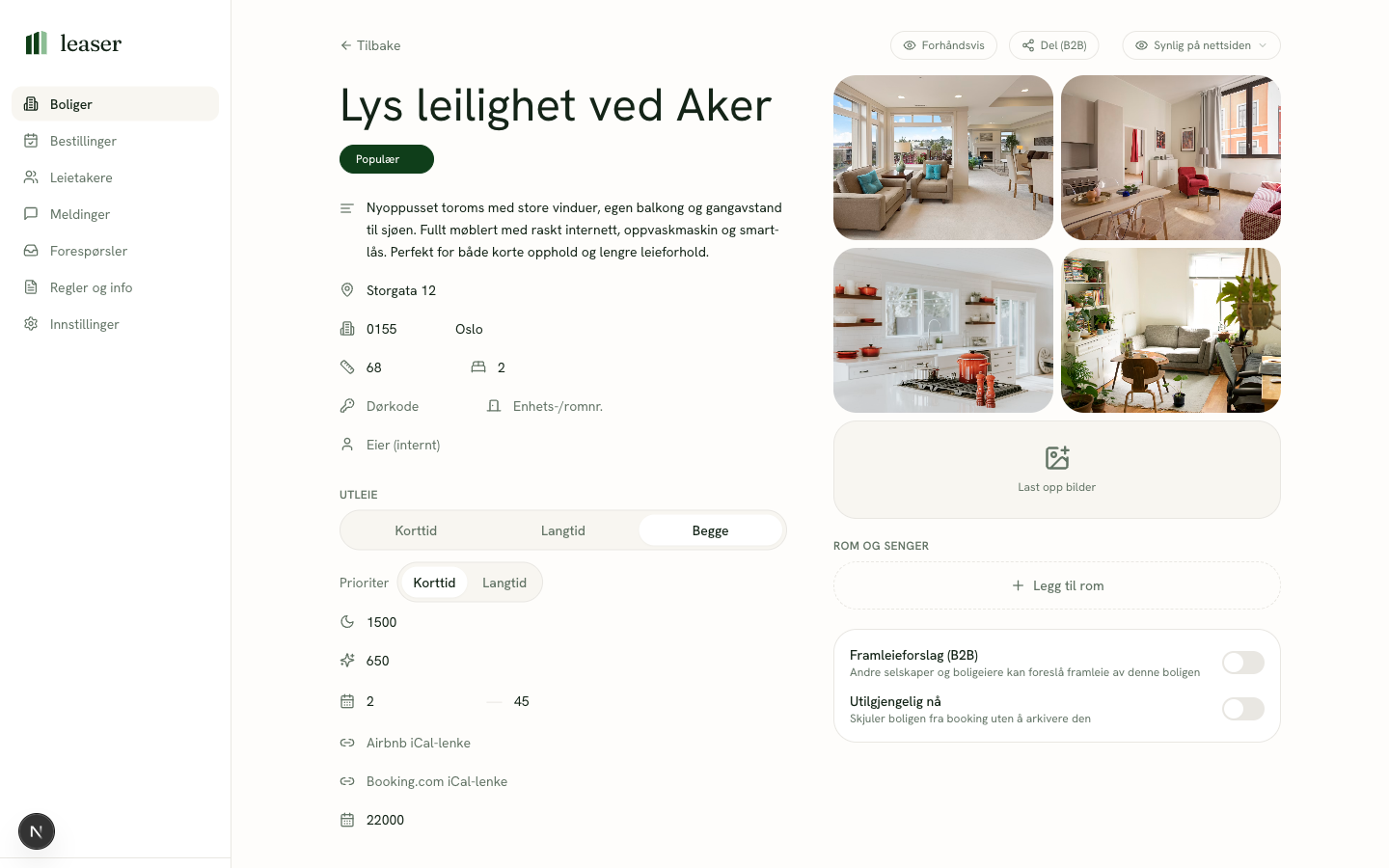
The moment a unit is listed on Airbnb, Booking.com and your own site at the same time, you risk two guests booking the same nights. The solution is calendar sync: when one channel books, the dates automatically become unavailable on the others.
- Two-way iCal sync keeps availability identical across channels.
- A server-side check stops two simultaneous bookings taking the same date.
- Min and max nights control which stays are even possible.
Set a priority per unit
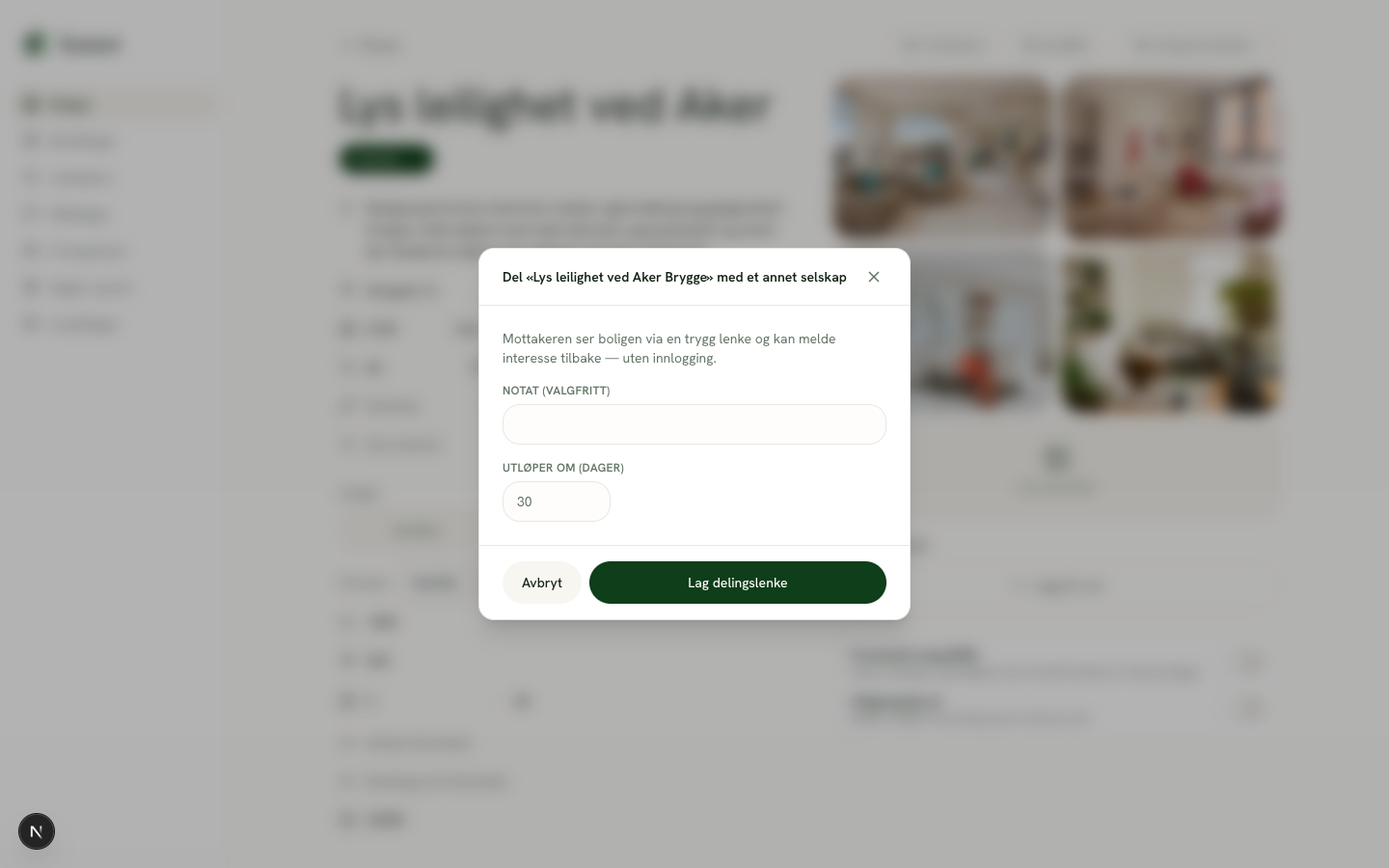
Some units should be shown as bookable, others should primarily collect rental interest, and some need both. In leaser you set the rental mode and priority per unit, so the listing is presented correctly to visitors.
A short checklist
- Connect the Airbnb and Booking.com calendars to each unit with iCal.
- Decide the priority: should the unit prioritise nights or months?
- Set min/max nights and any length discounts.
- Publish the unit on your own site so guests and tenants can book directly.
The same unit is ready for both, with no migration. You adjust the flow when your needs change.